New Orleans
New Orleans is the setting of Tennessee Williams' A Streetcar Named Desire, a city whose unique character—its raffish charm, racial intermingling, and atmospheric music—shapes the play's events and themes. The French Quarter neighborhood of Elysian Fields, where the Kowalskis live, provides a stark contrast to the lost plantation world of Belle Reve, and the city's legal and social codes, including the Napoleonic code, become instruments of conflict. New Orleans is not merely a backdrop but an active force that defines the characters' lives and the play's tragic trajectory.
The City as a Living Presence
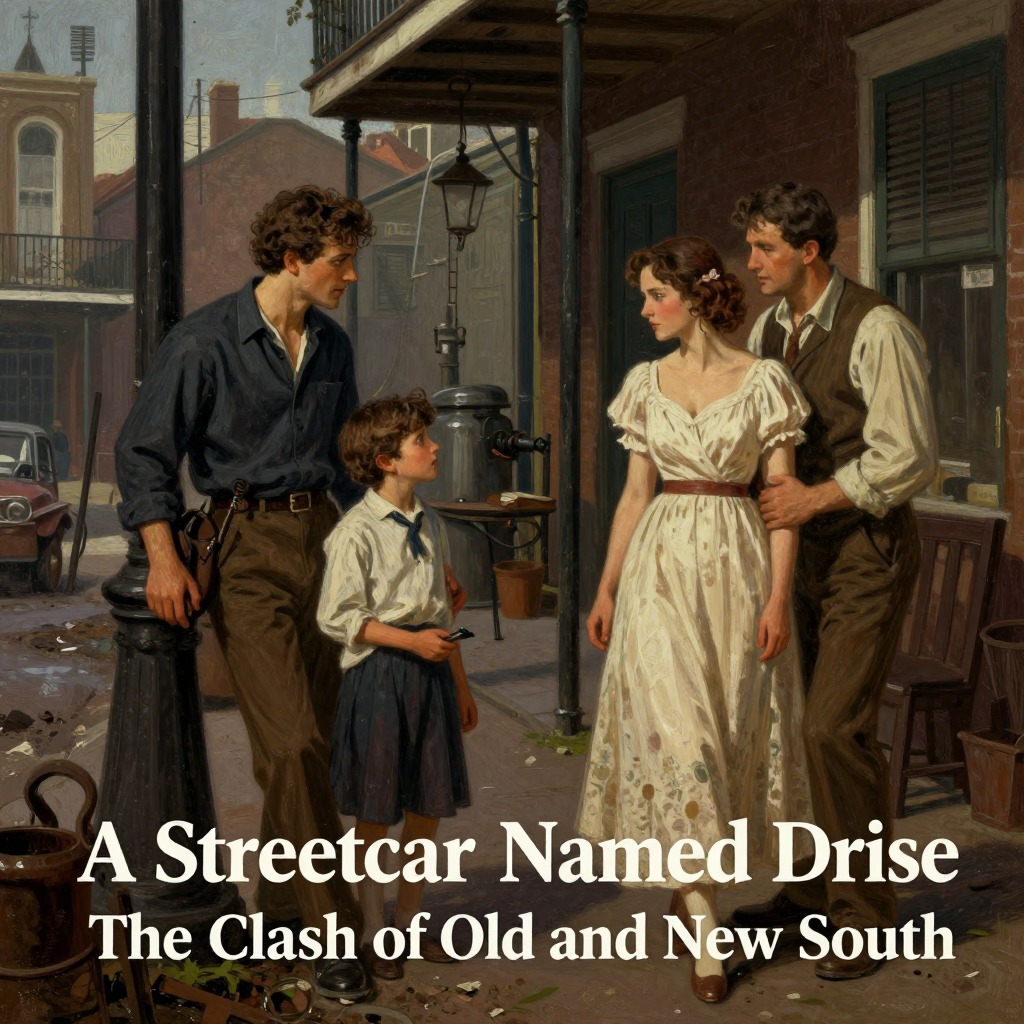
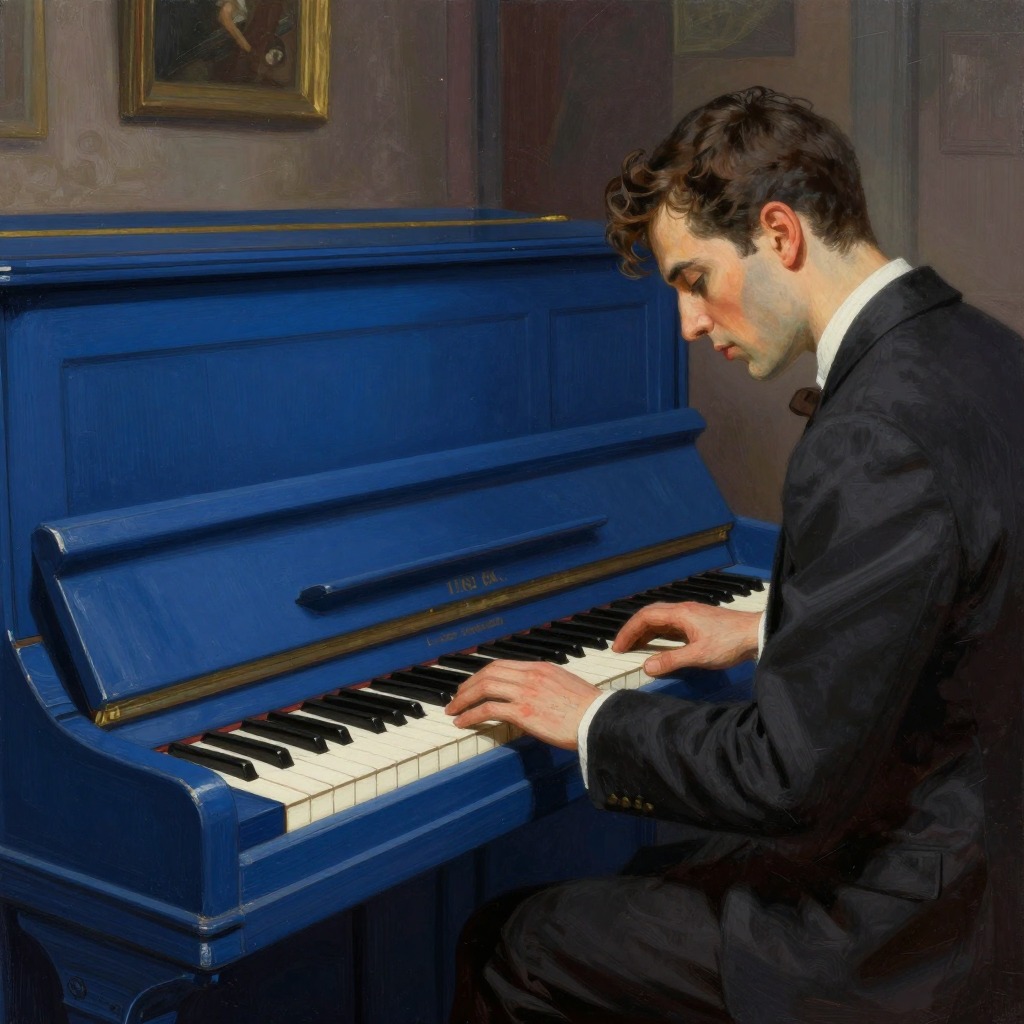
The play opens on a street in New Orleans named Elysian Fields, which runs between the L&N tracks and the river. The section is poor but, unlike corresponding sections in other American cities, it has a raffish charm. The houses are mostly white frame, weathered grey, with rickety outside stairs and galleries. The sky that shows around the dim white building is a peculiarly tender blue, almost a turquoise, which invests the scene with a kind of lyricism and gracefully attenuates the atmosphere of decay. The warm breath of the brown river beyond the river warehouses can almost be felt, with their faint redolences of bananas and coffee. A corresponding air is evoked by the music of Negro entertainers at a barroom around the corner, a "blue piano" that expresses the spirit of the life which goes on there. New Orleans is a cosmopolitan city where there is a relatively warm and easy intermingling of races in the old part of town, as seen when a white woman and a colored woman take the air on the steps of the building. Stella Kowalski defends her home to her sister Blanche DuBois, saying, "New Orleans isn't like other cities." The city's distinctive atmosphere, with its music and street cries, is a constant presence, from the "blue piano" to the call of the tamale vendor and the chimes of the St. Louis Cathedral.
A Stage for Class and Cultural Conflict
The city's legal framework becomes a weapon in the struggle between Blanche and Stanley Kowalski. Stanley invokes the Napoleonic code, which he explains is in effect in the state of Louisiana, according to which what belongs to the wife belongs to the husband and vice versa. He uses this to demand an accounting for the loss of Belle Reve, accusing Blanche of swindling his wife and, by extension, himself. The Kowalskis and the DuBois, he declares, "have different notions," a clash of cultures that plays out in the cramped quarters of the French Quarter. Stanley, a one hundred percent American born and raised in the greatest country on earth, bristles at being called a "Polack," asserting his identity against Blanche's Old World pretensions. The city's specific geography—the streetcar named Desire, the transfer to one called Cemeteries, the ride to Elysian Fields—provides the play's central metaphor for Blanche's journey. She tells Eunice Hubbell, "They told me to take a street-car named Desire, and then transfer to one called Cemeteries and ride six blocks and get off at—Elysian Fields!" The city's very layout maps her trajectory from desire to death to a false paradise.
A Landscape of Memory and Trauma
New Orleans is also the site of Blanche's traumatic memories and her final breakdown. The polka tune, the "Varsouviana," which plays in her mind, is associated with the death of her young husband Allan Grey at Moon Lake Casino, a place outside the city. The Mexican Woman who appears on the street, calling "Flores para los muertos" (Flowers for the dead), brings the presence of death directly to the door of the apartment. The lurid reflections that appear on the walls around Blanche, the shadows of a grotesque and menacing form, and the inhuman voices like cries in a jungle transform the French Quarter flat into a nightmarish landscape. The city's sounds—the roar of an approaching locomotive, the "blue piano"—become part of the psychological assault on Blanche. In the final scene, as the Doctor and Matron take her away, the cathedral bells chime, and she speaks of dying on the sea, her last words a poignant farewell to a city that has been both a refuge and a trap. The play ends with the poker players resuming their game, the "blue piano" and muted trumpet swelling, as life in New Orleans continues, indifferent to the tragedy that has just unfolded.